
2026 Cedar Park Housing Market: The Real Story Behind the Numbers
As we approach the end of 2026, the Cedar Park housing market continues to demonstrate just how much conditions have changed from the fast-paced seller’s market of a few years ago. Buyers have become more selective, pricing expectations have shifted, and sellers are facing a market where preparation, presentation, and competitive pricing can make the difference between selling successfully and spending months on the market.
If you have been following my 2026 Cedar Park Market Update Post and my Social Media Market Update Posts throughout the year, you have probably seen the pattern. As we close out 2026, he biggest takeaway is that Pricing Matters and Homes are Selling. Read more about Why Pricing Matters as we head into the 2027 real estate market.
To better understand what’s happening, I analyzed residential MLS activity in Cedar Park from January 1 through November 10, 2026, looking beyond traditional market statistics to examine original asking prices, actual selling prices, days on market, and properties that were withdrawn or expired without a sale during their listing periods.
What Happened to Homes Listed in 2026?
According to the MLS Market Snapshot, the following listing outcomes were recorded:
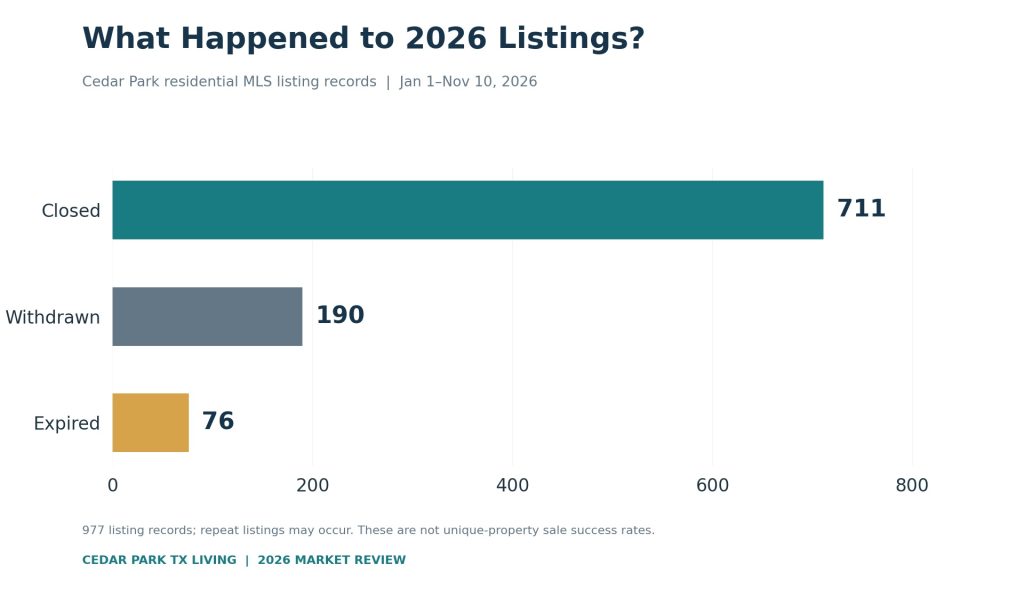
Approximately 27% of these listing records ended in withdrawal or expiration rather than a completed sale. However, some properties were listed more than once. A separate address-level comparison identified 18 properties that appeared in both the expired/withdrawn and closed-sales reports. This illustrates why listing outcomes shouldn’t be confused with the percentage of individual homes that ultimately sold or failed to sell.
How Much Did Homes Actually Sell For?
One of the most revealing findings was the difference between sellers’ original asking prices and the prices buyers ultimately paid. Among the closed transactions analyzed:
- Approximately 76% sold below their original asking prices.
- The median sale closed approximately 3.7% below the original asking price.
- Among properties that sold below their original asking prices, the median difference was approximately 5.4%.
So, for example, a property originally listed at $450,000, a 5.4% difference represents approximately $24,300. It’s important to distinguish the original asking price from the final list price. A property may sell for 98% of its final asking price after one or more reductions, but that doesn’t necessarily reflect where the seller started.
The Relationship Between Pricing and Time on Market
The relationship between original asking price, eventual selling price, and days on market was particularly revealing.
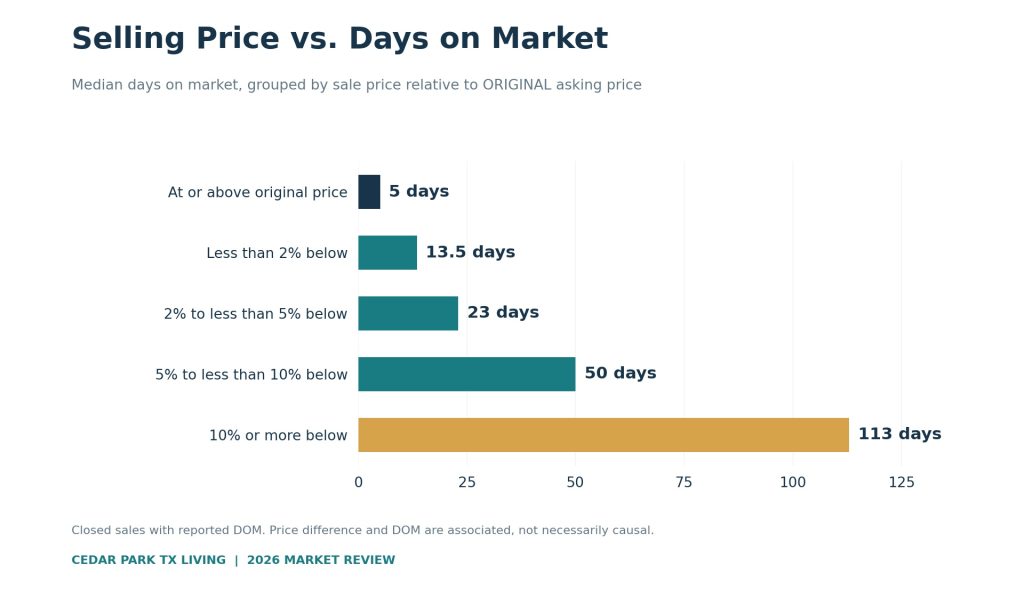
Homes that eventually sold 10% or more below their original asking prices had a median of 113 days on market, compared with just five days for homes that sold at or above their original prices. The longer a home stays on the market, the more discount a buyer expects. Sellers also just want or need to sell eventually and accept so they can move on. Right or wrong, that is the reality. After all that frustration and time, was it worth listing high?
The greater the difference between the original asking price and the eventual selling price, the longer properties generally remained on the market. This doesn’t mean every property that takes longer to sell was initially overpriced. Property condition, location, competition, and seller circumstances all influence the outcome. However, the relationship is difficult to ignore.
What About Homes That Didn’t Sell?
Traditional housing market reports generally focus on successful sales. But properties that expire or are withdrawn tell an equally important story. The MLS reported the following median cumulative days on market:
Withdrawn listings accumulated nearly three times the median market exposure of closed listings, while expired listings accumulated three and a half times as much. Some of these homes were subsequently relisted, and some eventually sold. Others may have remained unsold or been removed from the market for personal reasons. The takeaway is that sellers face more than the possibility of accepting a lower price. They also face the possibility of spending considerable time on the market without achieving a sale.

Why Starting High Can Backfire
One of the most common conversations I have with sellers involves the desire to price a home above market value to “leave room for negotiation”. I understand the thinking and try to reason with them as to why it can backfire, but I also can’t force someone to sell their home for less than they think it’s worth. It’s frustrating all around. Yes, I could decide to not take the listing, but sometimes I have invested weeks and months preparing a home for sale. And I build a relationship with my clients. So, we work through the process together, sometimes more painfully than it needed to be… Sellers want to protect their equity and avoid leaving money on the table, I get that. I want to net them the most money possible. But the cost of pricing high should be factored into that net.
But buyers don’t necessarily interpret an asking price as an invitation to negotiate. A buyer who believes a home is worth $415,000–$425,000 may simply move on rather than offer $15,000–$25,000 below asking. Many buyers feel awkward about “lowballing”, especially when a home is new on the market. And that’s the danger of starting high. You don’t necessarily get the opportunity to negotiate because buyers may never engage. Today’s buyers can compare dozens of properties online before ever scheduling a showing. They’re evaluating not just the price of an individual home but everything else available within their budget. That includes newer construction, builder incentives, updated resale properties, and homes offering more space or desirable features. A seller’s competition and determination of value isn’t simply what similar homes sold for six months ago. It’s what buyers can purchase today.
Looking Ahead to 2027
As we move into 2027, I hope for realistic pricing, thoughtful preparation and flexibility to remain important factors in successful home sales.
Mortgage rates, employment conditions, affordability and consumer confidence will continue to influence the market. While improvements in these areas could encourage more buyer activity, sellers shouldn’t assume a return to the extraordinary conditions of 2020–2022.
For buyers, greater selection and negotiating opportunities can be advantageous. But purchasing a home should still make sense financially and personally. Sometimes renting or waiting is the better decision. Making thoughtful offers, presenting the facts to sellers and creating a successful path for buyer and sellers agreement is what leads to a closed sale.
For sellers, the lesson from 2026 is clear: entering the market with an informed pricing strategy is far more productive than simply testing the highest price you hope someone might pay. What you hope to get, isn’t what the market will bear, especially at this time.
After more than two decades working as a full-time real estate professional, I’ve learned that successful transactions aren’t just about getting a property sold. They’re about helping people make decisions that support their financial security, lifestyle and long-term goals.
The best real estate decision isn’t always to buy or sell right now. It’s the decision that makes the most sense for your life. Because people don’t buy homes. They choose lives.
If you are thinking of buying or selling in 2027, let’s meet now and work on your game plan. Understanding the market and analyzing your goals, short term and long term, helps you make confident decisions. Read more about my Listing Services and Contact Cedar Park Living to get started. Check out what our past customers have to say.

Source: Unlock MLS/Matrix residential listing data, Cedar Park, Texas, January 1–November 10, 2026. Includes single-family residences, condominiums, and townhomes. Listing-status counts represent MLS records, not necessarily unique properties. Closed-sale pricing and DOM comparisons are based on available individual listing data. Results may include new construction and repeat listings.
